Gardening Services Norwood — Recycling and Sustainability
At Gardening Services Norwood we put the environment at the heart of every job, creating an eco-friendly waste disposal area on site and sustaining a practical sustainable rubbish gardening area across front gardens, communal spaces and commercial grounds. Our policy is to keep organic material and reusable items in the local circular economy wherever possible, reducing truck miles, lowering emissions and supporting community reuse projects. We design simple, repeatable on-site systems so every crew can implement green waste capture reliably, improving neighbourhood cleanliness and soil health over time.Designing an eco-friendly waste disposal area
Practical site design matters: we provide clearly marked containers for compostables, wood, soil and mixed recyclables, along with a compact sorting bay and storage for reclaimed items. We invest in crew training so that every bin is used correctly, and we run short toolbox talks to reinforce best practice. Our stations include weatherproof signage, easy-to-clean liners and an agreed flow from collection to transfer station. These small design choices increase capture rates and reduce contamination, aligning our operations with local borough preferences. Our sustainable rubbish gardening area is tailored to Norwood’s mix of terrace gardens, allotments and small commercial plots. By separating green garden waste, food-contaminated organics and inert materials at source we reduce cross-contamination and ensure higher-quality feedstock for composting. This approach respects the boroughs' approach to waste separation — commonly handling glass, paper, food waste and green waste in distinct streams — and helps ensure that materials arriving at transfer facilities are accepted for recovery rather than rejected.
How we process green waste and bulky materials
Our workflow turns potential rubbish into resources through a clear sequence: we sort on-site, recover reusable items, process woody material and deliver compostables into the correct treatment stream. Key steps include:- On-site sorting into compost, woodchip, soil and reusable items to prevent cross-contamination.
- Processing clean timber on-site where feasible for chipping and mulch production.
- Transporting organics to certified composting hubs or local transfer stations that accept municipal green waste.
- Donating intact plants, pots and tools through agreed charity routes to extend product life.
These steps ensure the eco-friendly waste disposal area functions as a resource-creation space, not a skip for landfill. We also maintain records to track volumes of mulch, compost and reclaimed materials returned to the community.
 We work closely with local transfer stations that serve Norwood — routing loads to facilities in Croydon, Lambeth and neighbouring borough transfer hubs as required — to ensure green waste enters the correct recycling stream. Consolidating loads and coordinating schedules with transfer stations reduces double-handling, shortens haul distances and increases throughput efficiency. When borough collections require specific containerisation or sorting rules, we adapt our on-site systems so loads are compliant before arrival, avoiding rejection fees and delays.
Charity partnerships, reuse and community benefit
Donations and partnerships are central to our sustainable rubbish gardening area. We link with community allotments, local food-growing projects and social enterprises to pass on usable soil, healthy plants and functional pots. Partners include grassroots volunteer groups, community garden initiatives and national reuse charities that accept tools and garden furniture for upcycling. These relationships create social value: reusable items stay in circulation, local projects receive free resources, and we reduce the need for new purchases.To ensure measurable progress we have set a clear recycling percentage target: we aim to recycle or compost 75% of all garden and site waste by the end of 2027. That target covers mulch, woodchip, soil, plant material and salvageable items. Progress is monitored through job-level reporting, monthly audits and weighbridge records at transfer stations. Crew performance is reviewed visually and via data, enabling targeted training where contamination or process gaps appear.
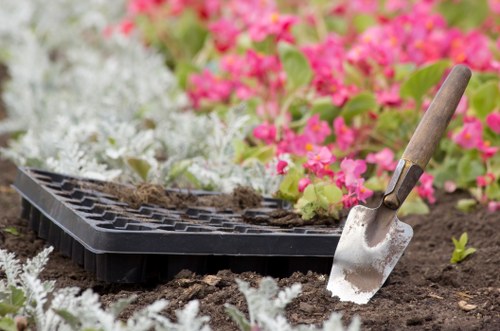 Specific recycling activities we run in the Norwood area include separate collections for green waste, a reuse pathway for potted plants and bulbs, and a targeted reclaim scheme for pots and garden furniture. We align these activities with borough guidance on waste separation so loads arriving at transfer stations meet acceptance criteria. Practical steps to reduce contamination include pre-job checklists, on-site containment mats to prevent soil loss, and sealed bags for small organic materials that would otherwise scatter.
 Low-carbon vans and greener transport are essential to reducing the environmental footprint of garden maintenance. Our fleet now includes electric vans for short-distance tasks, hybrids for flexible duty cycles and efficient Euro 6 vehicles for heavier loads. We also use cargo e-bikes for small, inner-suburb deliveries and optimise route planning to minimise empty return trips. Combining vehicle upgrades with better on-site separation significantly lowers overall emissions from our operations.
We continuously review local transfer station partnerships, charity links and fleet options to improve performance and hit our recycling targets. Regular collaboration with borough recycling officers helps us stay aligned with changing local policies and container requirements. Our goal is to be a visible local example of how a practical sustainable rubbish gardening area can deliver cleaner streets, richer soils and lower carbon impact while supporting community initiatives across Norwood.
Gardening Services Norwood is committed to making the eco-friendly waste disposal area a standard part of every visit: prevention, reuse and resource recovery drive our decisions so that green waste becomes compost, wood becomes mulch, and good items find new homes through charities and social projects. This is how we turn routine gardening into a positive environmental contribution for the boroughs we serve.